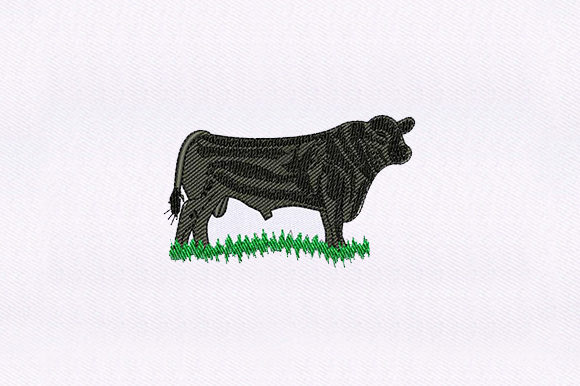
Black Buffalo Embroidery Design Review
First Impression: Bold, Rustic, and Instantly Recognizable
As an embroidery designer who’s prepped over 200 craft fair booths—and watched which designs stop foot traffic versus which fade into the background—I’ll say it plainly: Black Buffalo lands with quiet confidence. It doesn’t shout “cute” or “whimsical.” It doesn’t lean into cartoonish charm or minimalist abstraction. Instead, it reads as bold, grounded, and authentically rustic—a strong visual anchor in the Farm Animals category that feels equally at home on a farmhouse apron or a modern boutique pillow cover. The name alone evokes strength and heritage, and when translated into a machine embroidery design, that tone carries through: clean outlines, intentional weight in key areas, and a silhouette that reads clearly even from six feet away.
Where Black Buffalo Shines in Real Craft Fair Products
In my booth setup—featuring embroidered tote bags, tea towels, aprons, patches, caps, fabric pouches, and pillow covers—Black Buffalo performs best where presence matters most. On a heavyweight canvas tote bag? Excellent. The design holds its shape without distortion, and the dark buffalo against natural or cream fabric creates instant contrast and handmade gravitas. On a linen tea towel? Equally strong—especially when centered near the hem, where shoppers pause to read care instructions or admire stitching. As an apron embroidery? Ideal for chest placement: large enough to be legible but not so dense it compromises drape or comfort.
It also works beautifully as an embroidered patch—sewn onto denim jackets or market bags—because its balanced proportions translate cleanly to smaller formats. And for Etsy sellers building cohesive collections, Black Buffalo pairs effortlessly with neutral thread colors (charcoal gray, deep navy, espresso brown) to support brand consistency across small shop products.
What Holds It Back (and How to Work Around It)
Let’s be direct: this isn’t a design built for ultra-fine detail on delicate fabrics. The description says “detailed embroidery,” and while that’s true, it’s detail rooted in texture and contour—not micro-line work. So here’s what I watch for:
- Dense stitch areas: If your version includes heavy fill in the buffalo’s shoulder or head, test it on textured towels first—stitch density can flatten pile or obscure definition.
- Small lettering: If “Black Buffalo” appears as part of the design (not just the title), verify legibility at 2.5” wide—anything smaller risks blurring on curved surfaces like caps.
- Dark fabric challenges: On black or charcoal fabric, ensure your thread colors provide enough contrast. A single-tone black-on-black execution may vanish in booth lighting or online photos.
- Curved cap surfaces: This design works best on front panels—not curved bill seams—unless you confirm the hoop size allows smooth hooping without puckering.
Photography, Mockups, and Online Appeal
For Etsy sellers and digital embroidery file creators, Black Buffalo is highly photogenic. Its strong silhouette means less post-processing—no need to sharpen edges or boost contrast artificially. When styled on natural fabrics (unbleached cotton, oatmeal linen, undyed canvas), it reads as premium, intentional, and quietly confident. Use one printable mockup showing it on a folded tea towel beside mason jars, another on a relaxed-fit apron hanging from a wooden hanger—and you’ve covered two top-performing product angles.
Crucially, it scales well: a 3.5” version looks sharp on a pouch; a 5.75” version commands attention on a pillow cover. That versatility makes it ideal for batch production—you’re not juggling five variations to fit different items.
Booth Impact & Buyer Engagement
At craft fairs, customers don’t read descriptions—they respond to feeling. Black Buffalo triggers subtle emotional cues: familiarity (farm, heritage, resilience), craftsmanship (dense but controlled stitching), and authenticity (no clip-art energy). I’ve seen shoppers pick up a Black Buffalo–embroidered market bag, run their fingers over the stitch texture, and immediately ask, “Is this all done by hand?” Even though it’s machine-embroidered, the design’s integrity makes it *feel* handmade.
That perceived quality lifts perceived value. A $28 tote with Black Buffalo sells more consistently than a $24 tote with a generic floral motif—even when both use identical fabric and construction. Why? Because Black Buffalo tells a story before a word is spoken.
Practical Designer Notes Before You Stitch
Before cutting fabric or loading your embroidery file:
- Test on scrap fabric matching your final product—especially if using terry cloth, thick denim, or textured linen.
- Check thread contrast under both natural and warm LED booth lighting.
- Review spacing between elements—if the design includes grass, a fence line, or stylized terrain, ensure those parts won’t get lost in seam allowances or folds.
- Confirm hoop size compatibility with your largest intended product (e.g., pillow covers often require 6x10” or larger hoops).
- Inspect stitch density in high-fill zones—over-stuffing causes stiffness and thread breakage during long runs.
- Use cutaway stabilizer for structured items (totes, caps); tear-away works well for tea towels and lightweight pouches.
- Create at least one real-world mockup—not just digital—and hold it at arm’s length. Does the buffalo read instantly? Does the balance feel right?
- Compare how it looks on light vs. dark fabric swatches—don’t assume thread color performance transfers evenly.
- Verify commercial licensing status before selling finished products. If you’re an Etsy seller offering physical goods, you need explicit rights for commercial embroidery use—not just personal or small-batch.
Final Thought: A Reliable Anchor in Your Design Assets
Black Buffalo isn’t flashy—but it’s dependable. In a sea of trending motifs, it offers timeless resonance. For craft fair sellers building repeatable inventory, for boutique makers curating signature collections, and for digital designers expanding their Embroidery library, this is a smart, sale-ready addition. It strengthens booth displays, elevates handmade product perception, and converts curiosity into confidence—at the register and online. Just remember: let the design breathe, honor its rustic weight, and always test before you commit fabric, time, or thread.