Blue Ship: A Thoughtful Beach Embroidery Design Review
First Impressions: Calm, Clear, and Quietly Confident
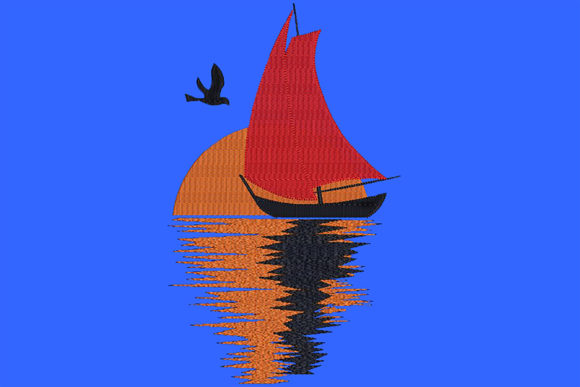
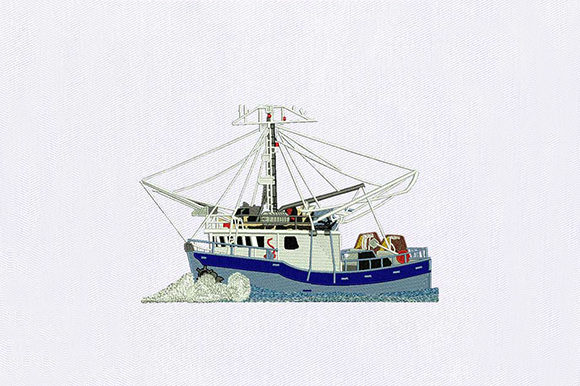
When I opened the Blue Ship embroidery file, what struck me wasn’t flash—it was balance. The shape is clean and nautical without leaning into cliché: a single vessel with gentle curves, a subtle sail, and just enough detail to read clearly at 3–4 inches wide. It doesn’t shout “beach!”—it breathes it. That’s rare. Most beach-themed machine embroidery designs overcommit: palm fronds everywhere, sunbursts, or cartoonish waves. Blue Ship holds space instead of filling it. As a designer who regularly sources embroidery files for client projects and my own craft business, that restraint is a green light—not just for aesthetics, but for versatility.
Real-World Use: From Tote Bag to Nursery Wall
Last week, I prepped a custom order: a set of linen tea towels for a coastal boutique. Their branding leans minimalist, their customers value quiet luxury—not novelty. I tested Blue Ship on a medium-weight natural linen towel using a tear-away + cut-away stabilizer combo. The result? Crisp satin stitch along the hull, even fill in the sail, zero puckering. No re-hooping. No thread breaks. It looked like something you’d find in a curated home goods shop—not a craft fair booth with mismatched fonts and glitter thread.
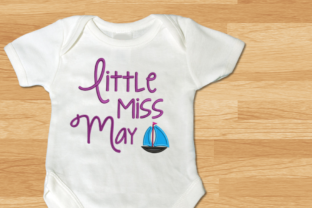
I also stitched it onto a lightweight organic cotton baby onesie (using soft cut-away stabilizer and reduced top tension). The design scaled down cleanly to 2.5 inches wide—no lost details, no dense stitching that would irritate delicate skin. That tells me Blue Ship isn’t just *pretty*; it’s thoughtfully constructed. It works as a standalone embroidered patch, a subtle sweatshirt chest accent, or a centered motif on a canvas tote bag—especially when paired with neutral thread colors like navy, charcoal, or heather gray.
Where It Shines—and Where to Pause
Blue Ship excels on stable, medium-to-heavy fabrics: denim aprons, twill caps, cotton duck pillow covers, and structured tote bags. Its moderate stitch density means it holds up well on items meant for daily use—think kitchen towels that go through weekly wash cycles or personalized gifts for new parents who’ll launder baby blankets often.
That said, I’d approach it carefully on highly textured fabrics like bouclé or thick terry cloth—the sail’s smooth fill stitch may sink or blur. On stretchy knits (like jersey tees), use a firm cut-away stabilizer and consider slightly reducing stitch speed. And while it reads beautifully on light fabric, test contrast thoroughly on dark backgrounds: some versions of this design rely on subtle tonal variation, so black-on-navy or charcoal-on-charcoal could mute impact unless thread choice is intentional.
It’s not ideal for tiny hoops under 4×4 inches—there’s just enough line definition and interior detail that shrinking further risks losing clarity. Likewise, avoid placing it directly over seams or curved surfaces like cap crowns unless you’ve verified hoop clearance and have experience with cap frames.
Design Integrity Meets Customer Trust
Here’s what matters most to me as both a designer and small shop owner: how a design shapes perception. Blue Ship feels intentional—not mass-produced, not rushed. When stitched cleanly, it elevates a handmade product instantly. Customers notice that. They don’t say, “Nice ship,”—they say, “This feels special. Like it was made *for* me.” That subtle shift builds trust, especially for Etsy sellers and craft fair vendors where differentiation is everything.
It also supports brand consistency beautifully. Whether you’re embroidering matching towels for a wedding suite, monogrammed beach robes for a boutique, or holiday gift sets with coordinating patches and pillow covers, Blue Ship acts as a unifying visual note—not a distraction. It’s calm enough to pair with script monograms or modern sans-serif text, yet distinctive enough to stand alone.
Practical Designer Notes Before You Stitch
- Always test first: Run Blue Ship on scrap fabric matching your final project’s weight and stretch.
- Check thread color contrast: Try it in navy, white, and stone—even if your palette is limited. See how legibility shifts.
- Review stitch density: If your machine struggles with dense fills, verify whether this embroidery file uses efficient fill stitch patterns or layered satin coverage.
- Confirm hoop size: Don’t assume compatibility—check the file’s recommended hoop dimensions before loading.
- Inspect small details: Zoom in on the sail corner and hull curve in your embroidery software. Are there stray running stitches? Overlapping satin edges?
- Mock it digitally: Drop Blue Ship into a printable mockup on both light and dark fabric swatches. Does it retain presence at 2x and 3x scale?
- Stabilizer strategy: For apparel, use cut-away. For towels or bags, try tear-away + light cut-away backing. Skip basic tear-away on thin or stretchy fabric.
- Licensing check: If you plan to sell finished products or resell the digital embroidery file, confirm usage rights—commercial embroidery requires clear licensing terms.
Final Thought: Not Just Another Beach Design
Blue Ship isn’t built for trend-chasing. It’s built for longevity—on fabric, on shelves, and in customer memory. It’s the kind of embroidery file I keep in my “trusted assets” folder: reliable across seasons, adaptable across product types, and respectful of both the maker’s time and the buyer’s eye. Whether you’re stitching personalized gifts for summer weddings, stocking a seaside boutique, or building a cohesive line of coastal-themed design assets, Blue Ship earns its place—not because it’s loud, but because it’s clear, capable, and quietly confident.