Walking Bird: A Thoughtful Embroidery Design Review
First Impressions: Charm Without Clutter
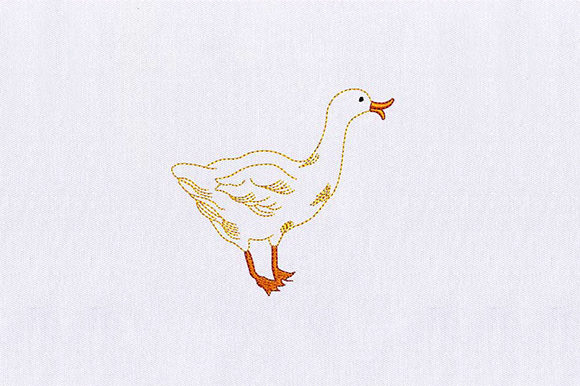
When I opened the Walking Bird embroidery file, what struck me first wasn’t technical precision—it was personality. This isn’t a stiff, symmetrical bird perched on a branch. It’s mid-stride: one leg lifted, wings relaxed but purposeful, head tilted just enough to suggest curiosity. The silhouette is clean and friendly—rounded edges, gentle curves, no fussy feathers or sharp angles. It reads as approachable, calm, and quietly confident—perfect for handmade products where warmth matters more than flash.
A Real Project Test: Custom Tote Bags for a Local Nursery Shop
Last month, I used Walking Bird on a set of organic cotton tote bags for a small nursery boutique. We stitched it centered on the front panel, about 3.5 inches tall. On medium-weight canvas with tear-away stabilizer, the design held beautifully—no puckering, no thread breaks. The satin stitch along the beak and eye gave subtle definition, while the fill stitch in the body stayed smooth and even. Customers loved how it looked *handmade*, not mass-produced: soft, intentional, and full of quiet character. One mom bought three bags—one for herself, two as baby shower gifts—and said, “It feels like the bird is walking right into your heart.” That kind of emotional resonance is rare—and valuable.
Where Walking Bird Shines (and Where It Asks for Care)
Walking Bird works especially well on:
- Custom apparel: Sweatshirts, lightweight hoodies, and structured tees—especially when placed on the chest or upper back. Its horizontal flow avoids awkward vertical distortion on stretchy knits.
- Tote bag design and aprons: The shape fills space gracefully without overwhelming fabric real estate. It scales well from 3" to 4.5" without losing clarity.
- Baby embroidery: On onesies or burp cloths, its simplicity reads clearly at smaller sizes—and parents appreciate designs that feel gentle, not cartoonish.
- Holiday embroidery and personalized gifts: Stitched in muted olive and cream on linen tea towels or embroidered patches for spring baskets, it adds seasonal charm without cliché.
- Commercial embroidery and Etsy listings: As a digital embroidery file, it’s versatile enough to serve multiple niches—nursery decor, slow-living brands, cottagecore apparel—without needing heavy customization.
But let’s be honest: Walking Bird isn’t bulletproof. Use caution on:
- Thin or delicate fabrics (like silk charmeuse or single-layer voile) — the stitch density may show through or cause shadowing. Always test with proper cutaway stabilizer.
- Curved surfaces like caps or beanies — the walking pose relies on a flat plane. On a curved crown, the legs can distort unless you adjust placement or use a low-profile cap hoop.
- Dark fabric with light thread — the subtle contours (like the slight curve under the wing) fade if contrast is too low. Try a tone-on-tone combo or add a light underlay stitch if your machine supports it.
- Products meant for frequent washing (baby bibs, kitchen towels) — check whether the fill stitch is dense enough to hold up over time. A quick wash-test on scrap fabric saves headaches later.
Design Integrity Meets Business Sense
As an embroidery designer who also sells finished products, I pay attention to how a machine embroidery design affects perceived value. Walking Bird elevates a plain tote or sweatshirt without demanding premium pricing—it feels special, but not intimidatingly “designer.” That balance is gold for craft businesses and Etsy sellers. Customers don’t question whether it’s handmade; they feel the intention behind it.
It also supports brand consistency. Whether you’re building a line of nursery-themed embroidery files or curating a boutique collection of handmade goods, Walking Bird fits naturally alongside botanical motifs, minimalist animals, or soft-toned typography—never competing, always complementing.
Practical Designer Notes Before You Stitch
Before adding Walking Bird to your next project—or listing it in your shop—here’s what I do every time:
- Test on scrap fabric using the exact stabilizer and thread colors you’ll use in production.
- Check thread color contrast in both natural and artificial light—some greens or blues shift dramatically on camera.
- Review stitch density visually, not just numerically. Dense areas should look plush, not muddy.
- Confirm hoop size compatibility—if your smallest hoop is 4x4", verify the design fits comfortably with seam allowance room.
- Inspect small details at 200% zoom: Is the eye crisp? Does the beak taper cleanly? Tiny flaws become glaring on finished products.
- Test black-and-white mockups—they reveal balance and readability better than color previews.
- Compare light and dark fabric backgrounds side-by-side. Some designs vanish on black; others get lost on ivory.
- Use proper stabilizer—this isn’t optional. Medium-weight tear-away works for most woven fabrics; cutaway is safer for knits or heirloom pieces.
- Verify licensing before selling finished items or bundling the embroidery file. If terms aren’t clear, contact the creator—don’t assume.
Final Thought: A Design That Walks the Line—Well
Walking Bird doesn’t shout. It doesn’t need to. In a market flooded with busy, over-digitized motifs, its quiet confidence stands out. It’s the kind of embroidery file I keep in my “go-to” folder—not because it’s flashy, but because it delivers consistent, trustworthy results across real projects: baby onesies that sell out at craft fairs, custom sweatshirts that earn repeat orders, printable mockups that convert on Etsy. It’s not just a bird walking across fabric. It’s a small, steady step toward thoughtful making—and that’s something every designer, seller, and maker can appreciate.