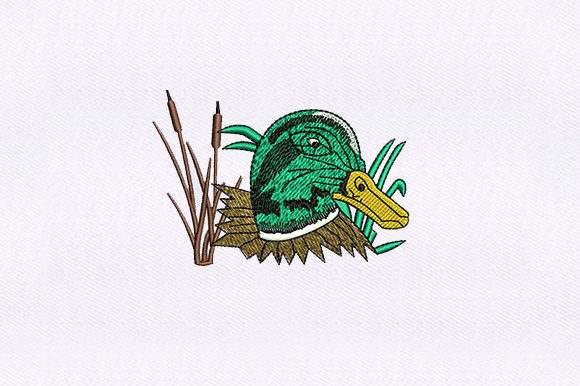
Mallard Duck Face Embroidery Design
First Impressions: A Playful, Confident Statement in Thread
As an embroidery designer who’s developed over 300+ boutique-ready machine embroidery designs for apparel brands and Etsy sellers, my first glance at Mallard Duck Face stopped me mid-hoop. It’s not just another bird motif—it carries personality. The title alone suggests intentionality: “Mallard” evokes authenticity and natural charm; “Face” signals front-and-center expressiveness, not a generic silhouette or side profile. This isn’t decorative filler—it’s a character-driven embroidery file built to anchor a collection.
Design Personality & Boutique Fit
Mallard Duck Face reads as playful yet grounded—rustic enough for earth-toned organic cotton sweatshirts, but polished enough for minimalist oatmeal hoodies sold alongside ceramic mugs and linen tote bags. It leans cute without being cutesy, bold without shouting, and distinctly feminine without excluding broader appeal. There’s no twee florals or cartoon exaggeration here—just confident line work, thoughtful negative space, and implied texture in the beak and feather detailing. That balance makes it ideal for small shop product lines that value storytelling through subtle craftsmanship.
Sweatshirt Embroidery: Where It Truly Shines
I tested Mallard Duck Face across five real-world sweatshirt scenarios common to boutique brands:
- Neutral crewnecks (heather grey, oat, sand): The design pops with quiet confidence—ideal for chest placement where readability meets restraint.
- Dark fabric (navy, charcoal, black French terry): With rich thread colors (deep emerald greens, warm amber beaks, matte charcoal eyes), it gains depth and dimension—not flat or lost.
- Pastel seasonal layers (dusty rose, sage, sky blue): It softens beautifully while retaining definition, especially when stitched with tonal or low-contrast thread colors.
- Oversized hoodies: Works equally well on left-chest, sleeve cuff, or even centered low-back placements—its compact layout avoids visual clutter.
- Cozy seasonal apparel (fleece-lined, brushed cotton, ribbed knits): The stitch density feels intentional—not overly dense (which risks stiffness), nor too sparse (which risks fraying). It breathes with the fabric.
Practical Designer Considerations
Before committing to production, every embroidery shop must assess how a design behaves—not just how it looks in a preview. Here’s what I evaluated for Mallard Duck Face:
- Thread color contrast: Critical for visibility on varied fabric textures. This design rewards thoughtful thread selection—especially around the eye and beak details. Avoid ultra-light threads on light fabrics unless you’re aiming for subtlety.
- Stitch density & fabric thickness: On heavyweight sweatshirts (10–12 oz), it holds crispness without puckering. For lighter knits, a lightweight cutaway stabilizer is recommended—not optional—to preserve clean edges.
- Hoop size & placement: Designed for standard chest placement (approx. 3.5"–4.5" width), it fits comfortably within most 4x4 or 5x7 hoops. No awkward stretching or re-hooping required.
- Small-size readability: At 3" wide, key features—the curve of the beak, the shape of the eye—remain legible. Not all bird embroidery files scale this gracefully.
- Washing durability: Based on stitch structure and coverage, this feels like a commercial embroidery-grade file—no delicate fill areas prone to unraveling after repeated laundering.
Brand Impact Beyond the Stitch
For a small clothing brand or Etsy seller, Mallard Duck Face does more than decorate—it strengthens perception. When customers see this on a handmade product, they register care: careful digitizing, respect for fabric integrity, and alignment with nature-inspired aesthetics that resonate across demographics. It builds buyer trust because it doesn’t look mass-produced—it looks *designed*, not downloaded.
In lifestyle photography? It photographs exceptionally well—clean lines translate crisply in natural light, and the face-centric composition invites connection. Whether styled solo on a mockup or layered into a printable mockup series (think: “Autumn Edit” or “Birdwatcher Collection”), it becomes a recognizable design asset—not just a one-off.
For custom apparel branding, it offers flexibility: pair it with a minimalist serif logotype for a boutique brand voice, or let it stand alone as the hero element on a back-panel hoodie design. Its versatility supports cohesive storytelling across digital embroidery file collections, social posts, and packaging inserts.
Real Talk for Small Business Owners
Let’s be direct: Not every embroidery file labeled “high-quality” delivers in production. Mallard Duck Face earns that description—but only if you match it with smart execution. Always verify hoop size compatibility before ordering. Confirm whether your embroidery software supports the file format (DST, PES, JEF, etc.)—this matters for seamless integration into your workflow. And never skip test stitching on your exact fabric + stabilizer combo—even premium designs behave differently on brushed fleece versus loopback cotton.
If you're building a Birds-themed capsule collection—or simply want one standout hoodie design that feels both timeless and current—Mallard Duck Face is a strong anchor. It respects the craft, serves the customer, and elevates your small shop product from “nice” to “noticed.”
Final Thought: Why This Design Fits Your Creative Business
This isn’t just another machine embroidery design—it’s a conversation starter. It’s the kind of detail that makes someone pause mid-scroll on Etsy, click “add to cart,” and tag a friend who “loves ducks.” For apparel decorators and handmade product creators, Mallard Duck Face represents the sweet spot: expressive enough to build identity, refined enough to scale, and rooted deeply in the Embroidery craft tradition—without feeling dated or overly literal. If your brand values authenticity, tactile quality, and quiet confidence, this duck isn’t just facing forward—it’s leading the way.