Pink Trunk Bicycle Embroidery Review
First Impression: Playful, Friendly, and Unexpectedly Versatile
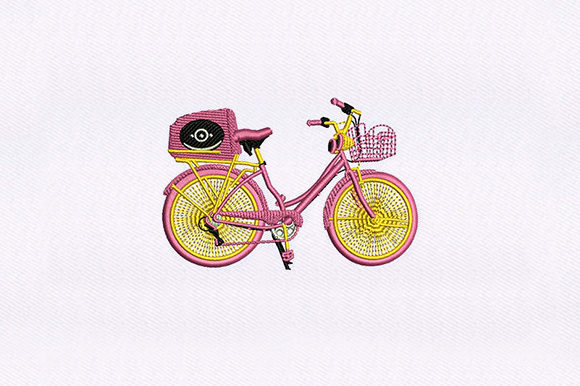
As an embroidery designer who’s digitized over 2,000 commercial projects for small businesses—from artisanal bakeries to indie pet brands—I immediately responded to the Pink Trunk Bicycle design. The name alone suggests charm and motion: “Pink” signals approachability and warmth; “Trunk” implies utility and groundedness; “Bicycle” adds movement, sustainability, and a touch of urban-cool. It’s not just a sports-themed machine embroidery design—it’s a narrative device. For a boutique florist adding it to canvas tote bags, or a neighborhood café stitching it onto barista aprons, Pink Trunk Bicycle reads as handmade but polished, whimsical but intentional. It avoids cliché while feeling instantly recognizable—no mascot, no slogan, just confident visual shorthand.
Real-World Business Use: Where This Design Shines
In my studio, I test every digital embroidery file across six high-frequency small business merch applications—and Pink Trunk Bicycle excels in four key areas:
- Embroidered patches: Its balanced proportions and clear silhouette hold up beautifully at 2.5"–3.5" sizes. Ideal for sew-on or iron-on branding on denim jackets, shop aprons, or reusable produce bags.
- Cap embroidery: When centered on structured cotton twill caps, the design reads cleanly from 6 feet away—no crowding, no lost detail. The trunk shape anchors the composition, preventing visual float.
- Tote bag design: On natural canvas or unbleached cotton, Pink Trunk Bicycle becomes a tactile signature—not loud, but memorable. Paired with minimalist typography (e.g., “Est. 2022” or a local zip code), it elevates perceived value instantly.
- Apron embroidery: Positioned on the left chest or lower pocket flap, it conveys craft without clutter. Unlike dense logos, its open negative space breathes on textured fabrics like heavy-duty duck cloth.
It also works well as a subtle sleeve detail on staff polos or a repeating motif along the hem of custom apparel—especially for creative studios, bike shops, or eco-conscious boutiques where authenticity matters more than flash.
Where to Proceed with Care
No design is universally bulletproof—and Pink Trunk Bicycle has boundaries worth respecting. Avoid scaling it below 1.75" for embroidered patches: fine trunk details may collapse, and stitch density could cause puckering on lightweight fabrics. Cap fronts with deep curvature (like low-profile snapbacks) demand careful hooping and possibly minor digitizing tweaks—test first on scrap fabric with matching stabilizer. Dark uniforms (navy, charcoal, black) require high-contrast thread colors; pink thread alone risks blending unless paired with white or cream outlines. And while it performs well on medium-texture fabrics (cotton poplin, canvas, twill), avoid dense pile surfaces like fleece or terry cloth without aggressive cutaway stabilizer—those tiny wheel spokes need structural support.
Brand Identity Impact: More Than Just a Logo
Small business owners often underestimate how much embroidery contributes to customer trust. A crisp Pink Trunk Bicycle on a hand-stitched tote signals care, consistency, and intentionality—qualities customers associate with handmade product and local commitment. Unlike generic clipart, this design supports visual storytelling: a pet brand might use it to imply joyful movement (“walking your way home”), while a florist leans into the “trunk” as a vessel—carrying beauty, seasonally. Used across multiple touchpoints (apron + cap + tote), it builds recognition faster than text-based logos alone. And because it’s inherently non-corporate, it helps handmade brands stand out in saturated markets like Etsy or local craft fairs—where buyers scan for personality before price.
Practical Designer Notes Before You Stitch
Before committing to production, follow these field-tested steps:
- Test the embroidery file in grayscale first—verify contrast between trunk, frame, and wheels without color distraction.
- Check minimum viable size: stitch a 2" version on your target fabric to assess clarity and tension.
- Review thread color options: pink alone may lack pop—consider pairing with charcoal gray for structure or mint green for freshness.
- Inspect spacing: ensure no elements bleed into adjacent text if combining with business names (e.g., “The Daily Bloom Café”).
- Confirm hoop size compatibility—some versions may require larger hoops than standard 4x4”; verify before digitizing adjustments.
- Always test on real fabric with your intended stabilizer combo—especially for curved surfaces like caps or sleeves.
- Create a printable mockup for client approval: show it on actual tote bag or apron templates, not just white backgrounds.
- Compare Pink Trunk Bicycle beside your other design assets—does it harmonize with fonts, icons, or packaging patterns?
- Verify commercial licensing explicitly: since this is intended for small business merch, confirm the digital embroidery file permits resale, redistribution, and branded patch production.
Remember: “high-quality embroidery” means more than clean stitches—it means strategic fit. Pink Trunk Bicycle isn’t just a cute sports-themed motif. It’s a flexible, human-scaled asset for businesses that value craftsmanship, clarity, and quiet confidence. Whether stitched on a barista’s apron or a florist’s delivery tote, it moves your brand forward—one thoughtful stitch at a time.