Halloween Haunted House Applique
First Impressions: Sweet Spookiness Done Right
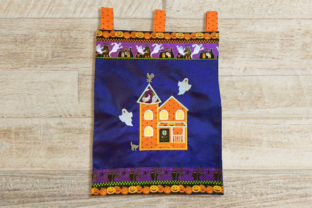
As an embroidery designer who’s tested hundreds of Halloween-themed machine embroidery designs, the Halloween Haunted House Applique stands out for its genuine charm—not just clever execution. It’s not overly cartoonish or aggressively scary; instead, it strikes that rare balance: delightfully spooky with a handmade warmth. The weather vane, creepy cat, and two flying ghosts are all distinct yet cohesive—each element has gentle curves, thoughtful spacing, and clear visual hierarchy. There’s no text included, which is a smart choice: it gives you full creative control over personalization. Whether stitched on soft minky or crisp linen, this design reads as sweet, seasonal, and intentionally crafted—not mass-produced.
Where This Design Shines: Real-World Personalized Gift Uses
The Halloween Haunted House Applique isn’t just a seasonal decoration—it’s a versatile storytelling piece. For baby embroidery, it adds whimsy to heirloom blankets, onesies (on stable, non-stretchy panels), and nursery wall hangings—especially when paired with soft gray or lavender thread colors. Wedding gift designers will appreciate how easily it elevates a custom tote bag or pillow cover for a couple who loves vintage Halloween charm or hosts cozy autumn celebrations. As a personalized gift, it transforms ordinary kitchen towels into conversation-starting hostess presents, and embroidered pillow covers become nostalgic keepsakes for grandparents celebrating their first grandchild’s first Halloween.
Etsy sellers and small shop owners can confidently list this as a digital embroidery file with strong visual appeal—its clean lines and balanced negative space photograph beautifully in printable mockups. Craft fair vendors report higher engagement when displaying finished products featuring the Halloween Haunted House Applique on aprons, tote bags, and quilted coasters. Because it’s an applique-based design, it also works well on textured fabric where dense fill stitches might struggle—think burlap accents on rustic pillow covers or cotton-linen blends for modern nursery decor.
Where to Use It Thoughtfully—Not Everywhere
Like any well-designed embroidery file, the Halloween Haunted House Applique thrives under the right conditions—and needs careful planning in others. Avoid using it on highly stretchy baby clothes unless fused onto a stable backing panel first. Curved surfaces like mug cozies or rounded tote handles may distort fine details (especially the ghost outlines or weather vane tip), so always test stitch on a similar shape before committing. Thick terry cloth towels require extra stabilizer and possibly reduced stitch density to prevent puckering—don’t assume the default settings will translate perfectly.
Dark fabric demands attention: check your thread color contrast early. A pale ghost won’t read on navy without careful selection—consider metallic silver or high-sheen white threads for visibility. And while the design avoids tiny lettering (a plus!), those delicate cat ears and ghost wisps still need sharp digitizing and proper tension. Always verify how they render after stitching—not just on screen.
Why Customers Trust This Design—Beyond the Stitch
When customers see the Halloween Haunted House Applique on your product page, they’re not just buying an image—they’re buying intention. Its handmade aesthetic signals care, seasonality, and attention to detail. That perception lifts perceived value instantly, especially for wedding gifts or baby embroidery where emotional resonance matters more than trendiness. Handmade product buyers respond strongly to designs that feel curated—not generic. This one does.
For Etsy sellers, it supports strong buyer engagement: shoppers linger longer on listings with clear mockups showing the design on multiple items (blanket + towel + pillow cover). That variety tells them, “This fits *my* life.” And because it’s offered in 9 formats and 4 hoop sizes, you can scale production across machines—no need to turn away custom orders due to size limitations. That flexibility builds customer trust, especially for small shop owners juggling diverse requests.
Practical Embroidery Notes You’ll Want to Follow
Before stitching your first customer order, run these checks:
- Test on scrap fabric—especially if using textured weaves or dark backgrounds.
- Confirm hoop size compatibility with your machine and intended item (e.g., 4x4” works for towel corners; 6x10” opens up blanket center placement).
- Review stitch density: applique-heavy files often layer raw edges—ensure your stabilizer (cutaway or tear-away, depending on fabric) fully supports that structure.
- Compare light and dark fabric mockups side-by-side to choose optimal thread colors—don’t rely solely on screen previews.
- Check small details post-stitch: ghost tails, cat whiskers, and weather vane points should be crisp—not frayed or lost in stitching noise.
- Verify commercial licensing before selling finished products. Since this is a digital embroidery file, confirm whether your purchase includes rights for small-batch commercial embroidery use.
A Design That Delivers Meaning—Not Just Motifs
The Halloween Haunted House Applique succeeds because it understands what makes a personalized gift memorable: it’s not about being the most complex or largest design—it’s about evoking feeling. A new parent sees comfort in its gentle spookiness. A couple choosing a wedding keepsake feels seen in its playful elegance. A craft fair shopper pauses because it looks *made for them*, not mass-manufactured.
That emotional connection starts with thoughtful digitizing—and continues through your choice of fabric, thread, stabilizer, and presentation. When you pair this embroidery file with intentional craftsmanship, you’re not just embroidering a house—you’re stitching story, season, and sentiment into every finished product. And that’s exactly why it earns a permanent spot in my Halloween design rotation—and why it deserves yours too.